In my previous blog posts, I explored how migrant men navigate the complex world of dating in diverse cultural environments. We looked at how they try to balance societal expectations, cultural differences, and personal desires in building relationships. But dating is just one piece of the puzzle when it comes to understanding the experiences of migrant men. In a book chapter titled Protective Migrant Masculinity: Between Marginalisation and Privilege, which is a part of the edited volume Migratory MenPlace, Transnationalism and Masculinities, I focus on another crucial aspect of their lives—the role of the nation of protection and how it shapes their sense of masculinity in new environments.
What is protective masculinity?
At the heart of this chapter is the concept of protective masculinity. This term refers to how men often take on protective roles within their families and communities. These roles may involve being providers, breadwinners, or physical protectors for their loved ones, mostly during uncertain and challenging times, but not just then. At first glance, it may seem like a positive trait, but it isn’t. This model of masculinity draws its strength from physical and economic foundations, portraying men as protectors who defend women, children, and society from perceived threats posed by others. By doing so, it reinforces male privilege and control, disguising dominance as care and sacrifice. This can be seen in everything from performing demanding physical labor to, in rare cases, risking life and health (Wojnicka & Kubisa, 2024). In the context of migration, protective masculinity becomes a strategy for coping with the loss of status and downward social mobility that many migrant men face. Protection is deeply connected to maintaining male privilege, power, and access to resources traditionally associated with men’s roles. This connection becomes particularly evident when protection is seen as breadwinning. For many male migrants, the decision to leave their home countries is driven by the desire to provide financial support for their families. These men often prioritize their family’s financial security, even if it means accepting that their masculinity is less valued in their host country than back home. Breadwinning, framed as a form of protection, plays a significant role in male migrant communities. By fulfilling this role, men not only sustain traditional forms of masculinity in their home communities but also create a “self-valorizing” version of masculinity. This means they find meaning and honor in the sacrifices they make for their families through paid work, even when they face challenges in the host society.
When marginalisation meets privilege
A central theme of my research is the tension between marginalisation and privilege. Some migrant men often find themselves in a double bind: they face discrimination and exclusion in their host countries while still benefiting from certain privileges associated with being male. This is definitely the case of Polish migrant men who live in one of the EU countries, which in the context of my research is Sweden. On the marginalisation side, migrant men frequently encounter racism, precarious work conditions, and social exclusion. These challenges can undermine their sense of identity and self-worth. Language barriers and cultural stereotypes further contribute to their struggles, making it difficult to fully integrate into their new environments. On the flip side, traditional gender norms often grant them a certain level of respect and authority within their cultural communities. Even when facing discrimination in the wider society, they may still be viewed as leaders or protectors at home. Moreover, being a white, EU citizens gives them advantages, that other, non-EU groups of migrants cannot cherish. This dual experience—being marginalised in some spaces while enjoying privilege in others—is a defining feature of Polishi male migrants communities.
And why does this matter?
Understanding the experiences of migrant men is essential for building more inclusive and equitable societies. Too often, public discourse either vilifies them as threats or overlooks their struggles entirely. My research aims to challenge these simplistic narratives and highlight the complexity of their lives. Recognising protective migrant masculinity can help us develop more nuanced perspectives on masculinity and migration. It allows us to understand the complexity of migrant men situations and struggles but simultaneously it remind us that migrant men are not homogenous groups and occupy different position in host/destination societies. Finally, as migration continues to shape our societies, it’s crucial that we broaden our conversations about gender and identity aspects of this phenomenon. By exploring concepts like protective migrant masculinity, we gain a deeper understanding of how different men navigate the challenges and opportunities of migration.
 The Guest Editors of the Special Issue of
  In several weeks the Department of Sociology and Work Science at the University of
 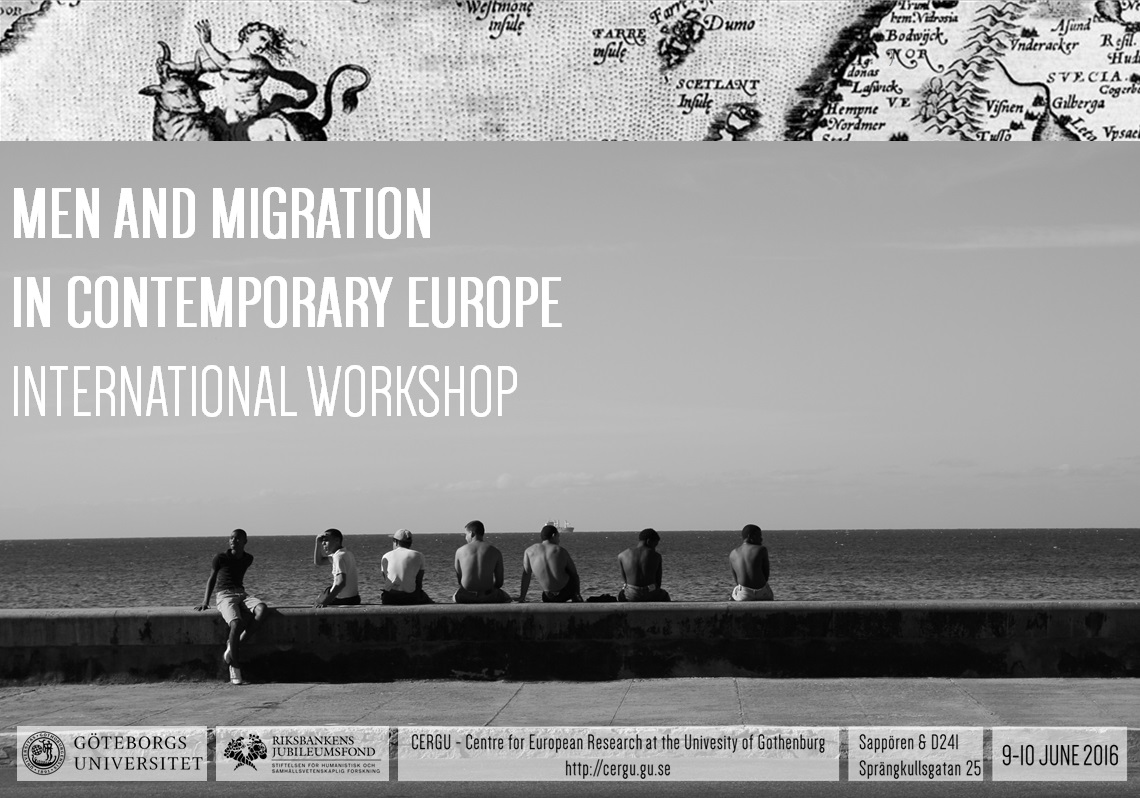 Between the 9th and 10th of June 2016 a group of social science scholars from multiple disciplines such as sociology, law, political science and gender studies from Sweden, the United States, Poland, Estonia, Germany, the United Kingdom, and Italy gathered at the
  Dr. K & THE men