My new book is published!

My book Mężczyznologia (Menology) is finally published and you can order it here.


Mężczyznologia is the first scholarly publication on the Polish market that comprehensively addresses the topic of men and masculinities from a sociological perspective. I present findings from years of international empirical research to offer readers an in-depth analysis of masculinity and men’s positions in contemporary society. This is not only a review of current academic debates, but also an attempt to understand how men’s social positions are shaped in the face of ongoing cultural, political, and economic transformations.

The book’s analytical core is a triad: the costs of masculinity, male privilege, and differences between men (Messner 2000). I argue that only by examining all three dimensions can we meaningfully answer the question: what is the situation of men today? I emphasize that men are not a homogenous social group and that their experiences—both in terms of the advantages and the challenges of being a man—are deeply shaped by class, ethnicity, age, or sexual orientation. The book explores hegemonic, marginalized, protective, and caring masculinities, all through an intersectional lens.

Mężczyznologia addresses topics of critical importance not only to academia but also to public debate: men’s health, emotions, work, fatherhood (including new forms of engaged fathering), and geopolitical issues such as war, migration, and male activism. These are all analyzed sociologically to better understand their dynamics and impact on individuals and society.

Accordig to Katarzyna Leszczyńska. AGH professor who reviewed it, Mężczyznologia “offers an excellent and insightful sociological analysis, attentive to the nuances of contemporary debates on masculinity. (…) It is not only an academic work, but also an important voice in social reflection, offering a new perspective on key issues. (…) Without a doubt, it will be one of the most significant social science titles of 2025.”

Not all that glitters is gold: rethinking caring masculinities

For decades, researchers, educators, and activists have asked: What would it take to change masculinity? How can we shift away from harmful, dominant models of manhood rooted in control, emotional stoicism, and disconnection? One answer that has gained traction in recent years is the concept of caring masculinities. The term promises a hopeful shift toward men who are nurturing, emotionally literate, and committed to equality. But what do we, scholars, really mean when we talk about caring masculinities? Can care truly reshape manhood, or does this concept simply repackage privilege in a softer tone?

In our recent article published in Men & Masculinities and simply titled Caring masculinities: Rethinking the concept, we unpack these questions by revisiting and critically rethinking the scholarly conceptualisation of caring masculinities. While it has typically been viewed as a progressive step forward, our research reveals that it’s not without complications. This blog post offers a brief overview of what we found—and why it matters for anyone interested in gender justice today.

What are caring masculinities?

Caring masculinities have been part of the scholarly discourse for over 20 years. Introduced to the literature by Holter and Lindqvist (2003), Boyle (2002), and Gärtner et al. (2007), among others, and popularized by Hanlon (2012) and Elliott (2016) the term, in the nutshell,  refers to expressions of manhood that prioritize care, empathy, and relational engagement over traditional masculine norms of dominance and control. Men who can be associated with caring masculinities might be involved fathers, emotionally present partners, or social workers and nurses who take pride in caregiving. They may champion gender equality in their personal lives and workplaces. In many ways, this represents an encouraging shift. But as our article argues, the story doesn’t end there.

In popular media and academic literature alike, caring masculinities are often portrayed as a linear progression: men moving away from traditional male traits and toward a more egalitarian future. But real-life gender relations are never that simple. Our analysis shows that caring masculinities often coexist with deep structural inequalities. In some cases, men’s performance of care can obscure or even reinforce their privilege—especially when care becomes a way to signal moral superiority without engaging in real, systemic change. This raises important questions: Who benefits from caring masculinities? And what kind of care are we talking about?

Critiques and complexities

Some scholars have already raised these questions and argue, for example, that focusing on individual transformations may overlook structural inequalities and the need for broader societal change. Others caution that caring masculinities could become a new form of hegemonic masculinity, privileging certain expressions of care while marginalizing others (Wojnicka and de Boise, 2025).  Our article emphasizes the importance of situating caring masculinities within broader socio-political contexts, acknowledging the interplay between individual agency and structural constraints.

In this context, caring masculinities risk becoming the new moral currency of privileged men. The “nice guy” persona can mask entitlement or reluctance to give up power. Men may adopt the language and gestures of care while still benefiting from patriarchal structures. When this happens, care stops being transformative—it becomes a kind of branding strategy, a way to appear progressive without challenging the status quo. This is particularly evident when looking at race, class, and migration. White, middle-class men often have more freedom to perform caring masculinities in ways that are seen as admirable. Racialized or working-class men may not be afforded the same space or may be judged more harshly when they express care or vulnerability. In other words, not all caring masculinities are received equally.

Implications for gender equality and social change

The takeaway, however, is not that caring masculinities are bad or useless. On the contrary, they offer an important counterpoint to dominant models of manhood. But we need to be honest about their limitations. Care isn’t neutral—it’s shaped by power, history, and social context. If we want caring masculinities to be more than just a softer mask for dominance, we have to ground them in political struggle and collective transformation. That means challenging workplace cultures, transforming parenting norms, rethinking welfare policies, and most importantly, listening to the voices of those most affected by gendered oppression—including women, queer people, and marginalised communities.

At a time when gender politics are both more visible and more contested than ever, how we imagine and enact masculinity matters deeply. Rather than celebrating individual men for “doing care,” we should be asking how care is done, who it serves, and what kind of masculinity it reinforces. Our article invites readers—and especially scholars and activists—to think more critically and more politically about this emerging field.

Emma Goldman, Elle Woods, and I

Starting yesterday, I’m officially a Visiting Scholar at the Minda de Gunzburg Center for European Studies at Harvard University, Cambridge. For the next five months, I’ll be knee-deep in finishing papers and doing my best to transform my nearly complete project on fatherhood activism in Europe into an actual book under the working title “In the name of the father, the child and gender equality: fatherhood activism in Europe.” This project, funded by the Swedish Research Council, has been my steadfast (and occasionally demanding) companion. It focuses on the complex yet fascinating world of gender (in)equality, masculinities, and fatherhood. I’m investigating European fatherhood activism from national, comparative, and transnational perspectives. Yes, it’s a niche, and yes, it’s important and yet very much underresearched. 

But what fatherhood activism actually is? Well, if you are plus minus my age, or older, you may remember 2004, when the image of a man dressed as Batman waving from a balcony at Buckingham Palace made headlines across the UK and beyond. This daring stunt, known as the “Batman Action,” was organized by the British fathers’ movement as a protest against what they perceived as unfair restrictions on divorced fathers’ access to their children. Since then, the group behind the action, Fathers4Justice, has become a symbol for European fathers’ rights organizations and a broader range of social movements focused on masculinity, male identity, and men’s roles in society. Contrary to the common belief that such protests are unique to the UK, fathers’ organizations exist across almost all European countries. In Sweden, for instance, PappaBarn has been actively advocating for equal parenthood and fathers’ rights for almost two decades. Similar groups in other countries play a critical role in shaping public debates around fatherhood, masculinity, and gender equality. Many of these movements collaborate through European umbrella organizations like Colibri – European Platform for Joint Custody and the Platform for European Fathers. Despite the significance of these movements, there is surprisingly little comparative research on their European dimension. While feminist and LGBTQ movements have been extensively studied, men’s movements have not received the same attention. This project seeks to change that by conducting the first comprehensive study of European fathers’ rights organizations from national, comparative, and transnational perspectives.

Existing research (also mine) suggests that there may be several distinct types of fathers’ movements in Europe—a softer, more cooperative and more progressive line and a harder, more conservative one. Understanding these differences is essential for gaining a nuanced perspective on how these groups function and influence debates about fatherhood and gender equality. The study was conducted in multiple stages. First, a mapping of fathers’ groups and an internet-based fact-finding mission was carried out across all EU/EFTA countries. In the second stage, interviews with activists, and participant observations were conducted with representatives from Germany, Spain, and transnational organizations. This data has been analyzed using theories from gender studies, critical studies of men and masculinities, and social movement research.  Beyond its academic contribution, the project holds significant societal relevance. It provides valuable insights for policymakers in Europe, support efforts to improve gender equality, and offer practical recommendations for fathers’ movements activists and other gender-based social movements. In the end, this research aims to bring much-needed attention to a little-explored but important social phenomenon, helping to shape a more inclusive and equitable discussion on gender and parenthood across Europe.

Now, none of this academic adventure would be possible without the Emma Goldman Award I was fortunate enough to receive in 2023. Thanks to Flax Foundations members (and their impeccable judgment in funding me), I get to spend these months in beautiful  Cambridge. But let’s give credit where it’s really due: Reese Witherspoon, aka Elle Woods, whose iconic journey to Harvard in Legally Blonde inspired me to come here (not fully covered in pink, unfortunately, but almost). So next stop? The manicure salon.

What does protective masculinity have to do with migrant men in Sweden, and why is it important?

In my previous blog posts, I explored how migrant men navigate the complex world of dating in diverse cultural environments. We looked at how they try to balance societal expectations, cultural differences, and personal desires in building relationships. But dating is just one piece of the puzzle when it comes to understanding the experiences of migrant men. In a book chapter titled Protective Migrant Masculinity: Between Marginalisation and Privilege, which is a part of the edited volume Migratory MenPlace, Transnationalism and Masculinities, I focus on another crucial aspect of their lives—the role of the nation of protection and how it shapes their sense of masculinity in new environments.

What is protective masculinity?

At the heart of this chapter is the concept of protective masculinity. This term refers to how men often take on protective roles within their families and communities. These roles may involve being providers, breadwinners, or physical protectors for their loved ones, mostly during uncertain and challenging times, but not just then. At first glance, it may seem like a positive trait, but it isn’t. This model of masculinity draws its strength from physical and economic foundations, portraying men as protectors who defend women, children, and society from perceived threats posed by others. By doing so, it reinforces male privilege and control, disguising dominance as care and sacrifice. This can be seen in everything from performing demanding physical labor to, in rare cases, risking life and health (Wojnicka & Kubisa, 2024). In the context of migration, protective masculinity becomes a strategy for coping with the loss of status and downward social mobility that many migrant men face. Protection is deeply connected to maintaining male privilege, power, and access to resources traditionally associated with men’s roles. This connection becomes particularly evident when protection is seen as breadwinning. For many male migrants, the decision to leave their home countries is driven by the desire to provide financial support for their families. These men often prioritize their family’s financial security, even if it means accepting that their masculinity is less valued in their host country than back home. Breadwinning, framed as a form of protection, plays a significant role in male migrant communities. By fulfilling this role, men not only sustain traditional forms of masculinity in their home communities but also create a “self-valorizing” version of masculinity. This means they find meaning and honor in the sacrifices they make for their families through paid work, even when they face challenges in the host society.

When marginalisation meets privilege

A central theme of my research is the tension between marginalisation and privilege. Some migrant men often find themselves in a double bind: they face discrimination and exclusion in their host countries while still benefiting from certain privileges associated with being male. This is definitely the case of Polish migrant men who live in one of the EU countries, which in the context of my research is Sweden. On the marginalisation side, migrant men frequently encounter racism, precarious work conditions, and social exclusion. These challenges can undermine their sense of identity and self-worth. Language barriers and cultural stereotypes further contribute to their struggles, making it difficult to fully integrate into their new environments. On the flip side, traditional gender norms often grant them a certain level of respect and authority within their cultural communities. Even when facing discrimination in the wider society, they may still be viewed as leaders or protectors at home. Moreover, being a white, EU citizens gives them advantages, that other, non-EU groups of migrants cannot cherish. This dual experience—being marginalised in some spaces while enjoying privilege in others—is a defining feature of Polishi male migrants communities.

And why does this matter?

Understanding the experiences of migrant men is essential for building more inclusive and equitable societies. Too often, public discourse either vilifies them as threats or overlooks their struggles entirely. My research aims to challenge these simplistic narratives and highlight the complexity of their lives. Recognising protective migrant masculinity can help us develop more nuanced perspectives on masculinity and migration. It allows us to understand the complexity of migrant men situations and struggles but simultaneously it remind us that migrant men are not homogenous groups and occupy different position in host/destination societies. Finally, as migration continues to shape our societies, it’s crucial that we broaden our conversations about gender and identity aspects of this phenomenon. By exploring concepts like protective migrant masculinity, we gain a deeper understanding of how different men navigate the challenges and opportunities of migration.

Waiting or dating? Migrant bachelors navigating love in Europe’s borderscapes

Picture this: you’re a single guy from Bangladesh or Syria, and you’ve just moved to Europe. New country, new culture, and—let’s be honest—a whole new dating scene. But how do migrant bachelors perceive singlehood in this uncharted territory? Our paper Waiting or dating? Migrant bachelors in the European borderscapes, where we present findings from our research project on single migrant men in the EU that you may have heard about already, dives into this very topic. This time, however, we compare the experiences of Bangladeshi migrants in Italy and Syrian migrants in Sweden.

In many cultures, being single is often seen as a transitional phase—a waiting room before the main event of marriage. However, in much of Europe, singlehood can be a lifestyle choice, complete with its own perks (like not having to share the TV remote). Our study found that Bangladeshi migrants in Italy often view their bachelor status as a period of waiting, aligning with traditional views from back home. In contrast, Syrian migrants in Sweden are more inclined to embrace singlehood as a valuable experience in itself, adopting what they perceive as a ‘European way’ of being single.

So, what’s driving these differing perspectives? We introduce the concept of ‘borderwork,’ which refers to the social and cultural boundaries that migrants navigate in their new countries. These aren’t physical borders but societal ones, shaped by factors like race, class, and community expectations. For Bangladeshi migrants in Italy, strong community ties and traditional values may reinforce the idea of singlehood as a waiting period. Meanwhile, Syrian migrants in Sweden might find more freedom to redefine their single status, influenced by a more individualistic society. Not surprisingly, economic factors also play a role. Migrants with higher socioeconomic status may feel more empowered to adopt new lifestyles, including embracing singlehood. In contrast, those facing economic hardships might adhere more closely to traditional norms, viewing marriage as a means of social and financial stability. In other words, navigating singlehood as a migrant bachelor in Europe is a complex dance between old cultural norms and new societal influences. Whether it’s seen as a waiting period or a lifestyle choice depends on a mix of factors, including community pressures, economic status, and the invisible borders that shape daily life. Understanding these dynamics offers valuable insights into the migrant experience and the evolving concept of singlehood in a globalized world.

Dancing on his own: intimate lives of single migrant men in Europe

When we think about migration and migrants’ experiences, a lot of us imagine the economic struggles, the cultural shock, and the difficulty of fitting into a new society. But rarely do we pause to consider the emotional and romantic lives of migrants, including single men. Are they on a wild ride of dating adventures in a new land? Or are they, in fact, facing a lonelier road than we might expect? In our latest article “He leads a lonely life: single men’s narratives of dating and relationships in the context of transnational migration” published in the Journal of Ethnic and Migration Studies we try to give you a look into this under-explored aspect of migrant lives. Spoiler alert: It’s not all roses and romance.

Let’s start by busting a myth that’s as stubborn as it is harmful—the idea that single migrant men are prowling through their new homelands like sexual predators, hunting for conquests. This stereotype paints them as aggressive, hypersexual beings who are only interested in one thing, labeling them as carriers of dangerous, foreign masculinity, which has been skillfully described by Paul Scheibelhofer years ago (2017). However, the reality is much more complex and, dare I say, relatable. The men interviewed in our study (we spoke to 51 single migrants from Bangladesh, Poland, Romania, and Syria, who live either in Sweden or Italy) are only rarely chasing after endless sexual encounters. Instead, they are usually searching for something far more meaningful—love, partnership, and a genuine connection. Unfortunately, this quest is often met with obstacles that leave them feeling frustrated and, ultimately, lonely. It turns out that being a single migrant man isn’t the playboy fantasy some might imagine; it’s more like a rom-com where the lead never quite gets the girl.

So, what’s dating like for these guys? Picture this: you’ve moved to a new country, you’re trying to navigate a different language, culture, and social norms, and on top of that, you’re trying to date. It’s not easy, and the men in the study describe their experiences as challenging, to say the least. They often find themselves on the receiving end of stereotypes and prejudice, with potential partners making assumptions based on their background. Some face outright rejection, while others are reduced to nothing more than their ethnicity or nationality. Some of them give up after a while, but others try again. They continue to search for meaningful relationships, even when the dating game feels like an uphill battle. The study highlights how their pursuit of love is often accompanied by a deep sense of frustration and loneliness. For many, the journey to finding a partner in a foreign land is fraught with misunderstandings, cultural barriers, and a lack of social networks. It’s not that they don’t want to connect; it’s that the odds are stacked against them.

One of the most striking findings from this research is just how lonely the experience of dating can be for these men. Migration often means leaving behind family, friends, and the familiar comfort of home. For single men, this can lead to a profound sense of isolation. They’re trying to build a new life in a place where they may not know anyone and where making new connections—romantic or otherwise—can be incredibly difficult. The men in the study talk about how this loneliness affects them deeply. They’re not just looking for a partner; they’re looking for a sense of belonging. And when that’s hard to find, it can be crushing. This isn’t just a matter of being unlucky in love; it’s about the broader challenges of integration and the emotional toll that migration can take.

Now, let’s get a bit nerdy for a moment because this research isn’t just about telling a story; it’s also about advancing theory in some pretty cool ways. In our analyses, we utilize the concept of sexual capital (Kaplan and Illouz 2021) in the context of migration—a move that’s as innovative as it is insightful.  Sexual capital is all about the social value a person has in the dating market. Think of it as the romantic equivalent of a credit score—it affects your desirability and the kind of relationships you can attract. The study argues that migration creates a unique sexual field where the rules are different and where migrants often find themselves with a lower “sexual credit score” than they might have had back home. In our view, this is a fresh way of looking at migration, love, and dating, and it opens up new avenues for understanding how these men navigate their romantic lives. But we don’t stop there. We also continue developing the concept of the sexual field (Green 2013) within the context of migration. A sexual field is essentially the social environment in which dating and relationships happen, influenced by factors like culture, social norms, and power dynamics. We argue that migration itself is a specific sexual field with its own unique challenges and dynamics. IOHO, this is rather a unique way of analyzing migration and integration.  By framing migration in this way, our research provides a new lens through which to understand the struggles and strategies of single migrant men in their search for love.

What makes this study so unique is its focus on a group that’s often overlooked or misunderstood in both academic research and popular media. Single migrant men are typically either ignored or demonized, but this research humanizes them, showing that their romantic lives are filled with the same hopes, dreams, and disappointments that anyone else might experience. By focusing on their narratives, we give a voice to men who are often silenced or marginalized. It challenges the stereotypes that paint them as predators and instead presents them as individuals navigating a complex and often unforgiving dating landscape.

If there’s one thing to take away from this research, it’s that single migrant men are not sexual predators or heartless Casanovas, as some might assume. They’re people—people who are often lonely, frustrated, and just trying to find love in a new and challenging environment. Their stories remind us that migration isn’t just an economic or political issue; it’s a deeply personal one, affecting every aspect of a person’s life, including their ability to form meaningful relationships. This study also reminds us of the importance of empathy and understanding. It challenges us to look beyond stereotypes and see the real, complex human beings behind them. And for those interested in the academic side of things, it pushes the boundaries of how we think about migration, dating, and the social dynamics that shape them. So, next time you hear someone making sweeping generalizations about single migrant men, remember our findings. They’re not out to conquer; they’re just trying to connect—just like the rest of us. And in that, there’s something truly relatable, human, and worthy of our attention and understanding.

How did I end up here? Stories from migrant men (the we have spoken with)

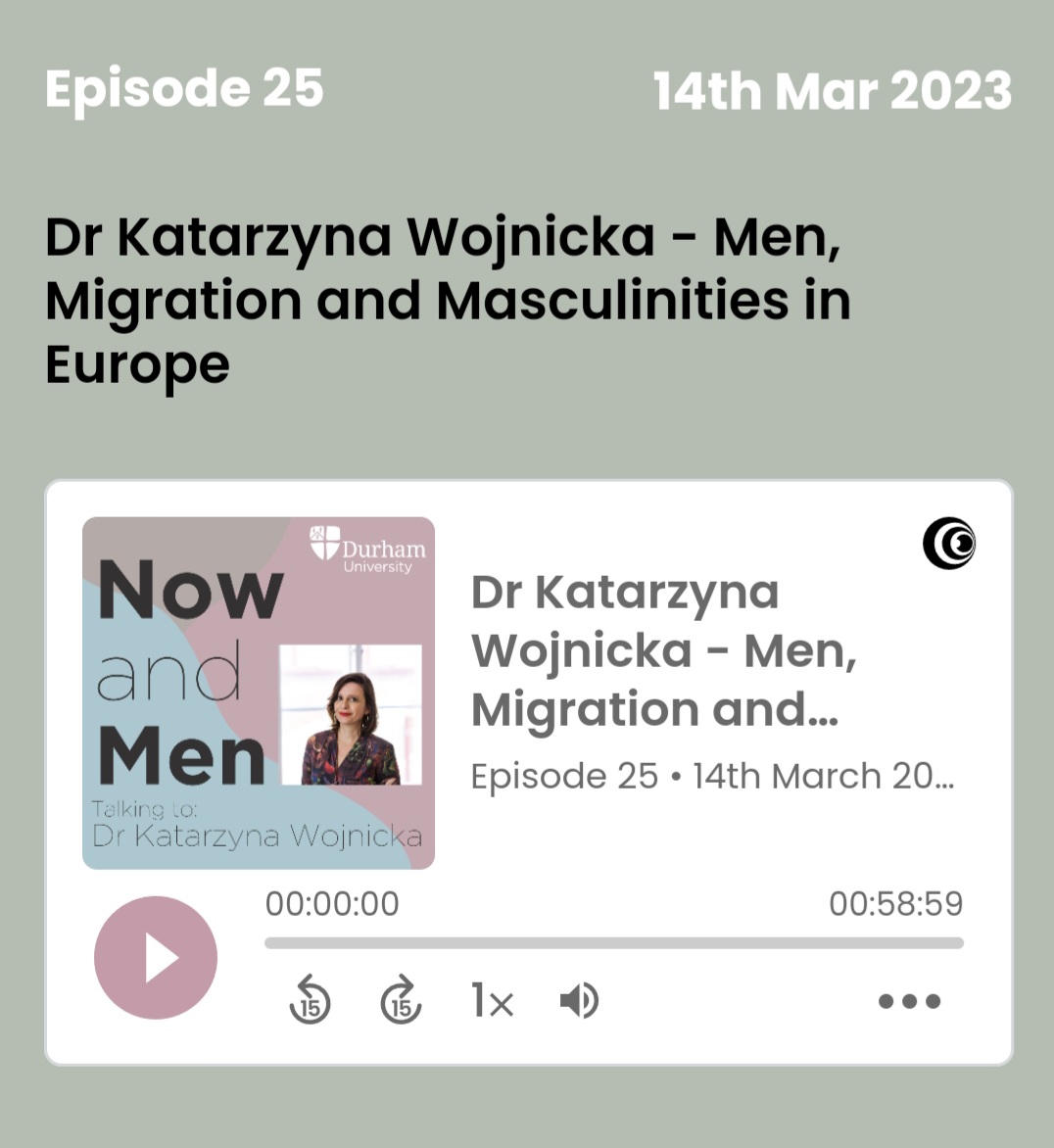
https://now-and-men.captivate.fm/episode/migration

In 2019, together with colleagues from Karlstad University and the Fulda University of Applied Sciences, we started our research with single migrant men who live, or lived at that time, in Italy and Sweden. The project Transnational bachelorhood: An ethnography of singledom among migrant men in the European Union was financed by the Swedish Research Council and ended one month ago (at least for me and my bank account ;)). In this project, we primarily focused on the situation of single men who have migrated and become part of transnational networks of family, kin, and friends. Although often represented as ‘dangerous foreign masculinities’ (Scheibelhofer 2017) and although they characterize a significant portion of migrants, this bachelorhood is an under-researched aspect of transnational migration. The project investigated four groups of transnational bachelors using a multi-sited ethnographic approach: Bangladeshis and Romanians in Italy and Syrians and Poles in Sweden. We have analyzed the situation of these men, particularly as it pertains to belonging, transnational families, intimate relationships, and masculinity. In order to understand it, we used an intersectional approach to space and masculinity (Wojnicka and Pustułka 2017) and a transnational perspective on personal relations.

Continue reading

CFP for the ESA 2021 Research Stream “Theorising Men and Masculinities: European Insights”

Dear all!
We would like to invite you to join our Research Steam on men and masculinities organised as a part of ESA 2021 conference, which, hopefully, will take place in Barcelona and not on Zoom anymore.In recent years, European sociology has been regularly enriched with research on men and masculinities. On the one hand, researchers recognise significant changes both in masculinity models and male gender roles, which have been shifting into a more egalitarian approach. At the same time, we must recognise that there has been a rise in anti-liberal/right-wing parties and social movements accompanied by the challenges of recent migration processes in Europe. As a result, one can observe the re traditionalisation of gender roles and the resurgence of patriarchal, hegemonic forms of masculinities. These particular changes have already been researched, and a significant number of studies focusing on specific topics have been produced. Particular findings have led to the development of theories rooted in a European context. One is caring masculinity theory (Elliott 2015), which has been expanding for almost a decade now (Hanlon 2012, Scambor et al. 2014).
Another theory with a clear European lineage is protective masculinity (Wojnicka 2020) which is a European contribution to the development of hegemonic masculinity theory (Connell 2005). Hence the main aim of this RS is to create an intellectual space for discussion focused on development of European theories related to Critical Studies on Men and Masculinities, which will enrich the preexisting theoretical landscape which is dominated by American and Australian scholars. When theories are discussed, however, new forms and challenges of methodologies linked to men and masculinities should also be taken into account. Thus we also invite papers on the methodological dimensions of sociological analysis of men and masculinities phenomena.

https://www.europeansociology.org/abstract-submission-open

CFP: Research Stream “Sociology of Masculinities: Theoretical and Methodological Implications” at the 17th Polish Sociological Congress “Me, Us, Them?Subjectivity, Identity, Belonging”, September 2019, Wroclaw, Poland

Dear all!Together with my other dear colleague, Julia Kubisa, we would like to invite you to join us in September in Wroclaw (Poland) at the 17th Polish Sociological Congress. We would mainly discuss (in English ;)) the theoretical and methodological contributions as well as challenges within the most fascinating subdiscipline ever, namely, the sociology of masculinities.

Continue reading

CFP: Research Stream “Men and Masculinities in a Changing Europe” at the 14th ESA Conference 2019, Manchester, UK

Together with my dear colleague, Katarzyna Suwada, I would like to invite you, dear sociologists, critical men and masculinities’ scholars as well as everyone else interested in sociology of masculinities, to join us in August in Manchester at the 14th European Sociological Associaton conference, where we would like to discuss the situation of men and condition of masculinities in a changing Europe.

In recent years two major trends linked to the transformation of masculinities can be observed in European societies. On the one hand, researchers recognise significant changes in both models of masculinities and male gender roles. These changes have been followed by a switch in public discourses and politics focused on men and boys (Scambor at al. 2014). Moreover, one can identify a flourishing number of grass-roots initiatives oriented on men and gender equality (Wojnicka 2016). Yet, on the other hand, Europe is also facing a crisis of liberal democracy, which affects the value of gender equality, and in some regions a re-traditionalisation of gender roles becomes excessively visible. Far-right groups, dominated by men, are gaining greater popularity by attacking (male) immigrants and refugees coming from other parts of the world. Such trends are connected to the resurrection of hegemonic and toxic forms of masculinities. They also create new forms of marginalised masculinities. Continue reading