My book Mężczyznologia (Menology) is finally published and you can order it here.
Mężczyznologia is the first scholarly publication on the Polish market that comprehensively addresses the topic of men and masculinities from a sociological perspective. I present findings from years of international empirical research to offer readers an in-depth analysis of masculinity and men’s positions in contemporary society. This is not only a review of current academic debates, but also an attempt to understand how men’s social positions are shaped in the face of ongoing cultural, political, and economic transformations.
The book’s analytical core is a triad: the costs of masculinity, male privilege, and differences between men (Messner 2000). I argue that only by examining all three dimensions can we meaningfully answer the question: what is the situation of men today? I emphasize that men are not a homogenous social group and that their experiences—both in terms of the advantages and the challenges of being a man—are deeply shaped by class, ethnicity, age, or sexual orientation. The book explores hegemonic, marginalized, protective, and caring masculinities, all through an intersectional lens.
Mężczyznologia addresses topics of critical importance not only to academia but also to public debate: men’s health, emotions, work, fatherhood (including new forms of engaged fathering), and geopolitical issues such as war, migration, and male activism. These are all analyzed sociologically to better understand their dynamics and impact on individuals and society.
Accordig to Katarzyna Leszczyńska. AGH professor who reviewed it, Mężczyznologia “offers an excellent and insightful sociological analysis, attentive to the nuances of contemporary debates on masculinity. (…) It is not only an academic work, but also an important voice in social reflection, offering a new perspective on key issues. (…) Without a doubt, it will be one of the most significant social science titles of 2025.”
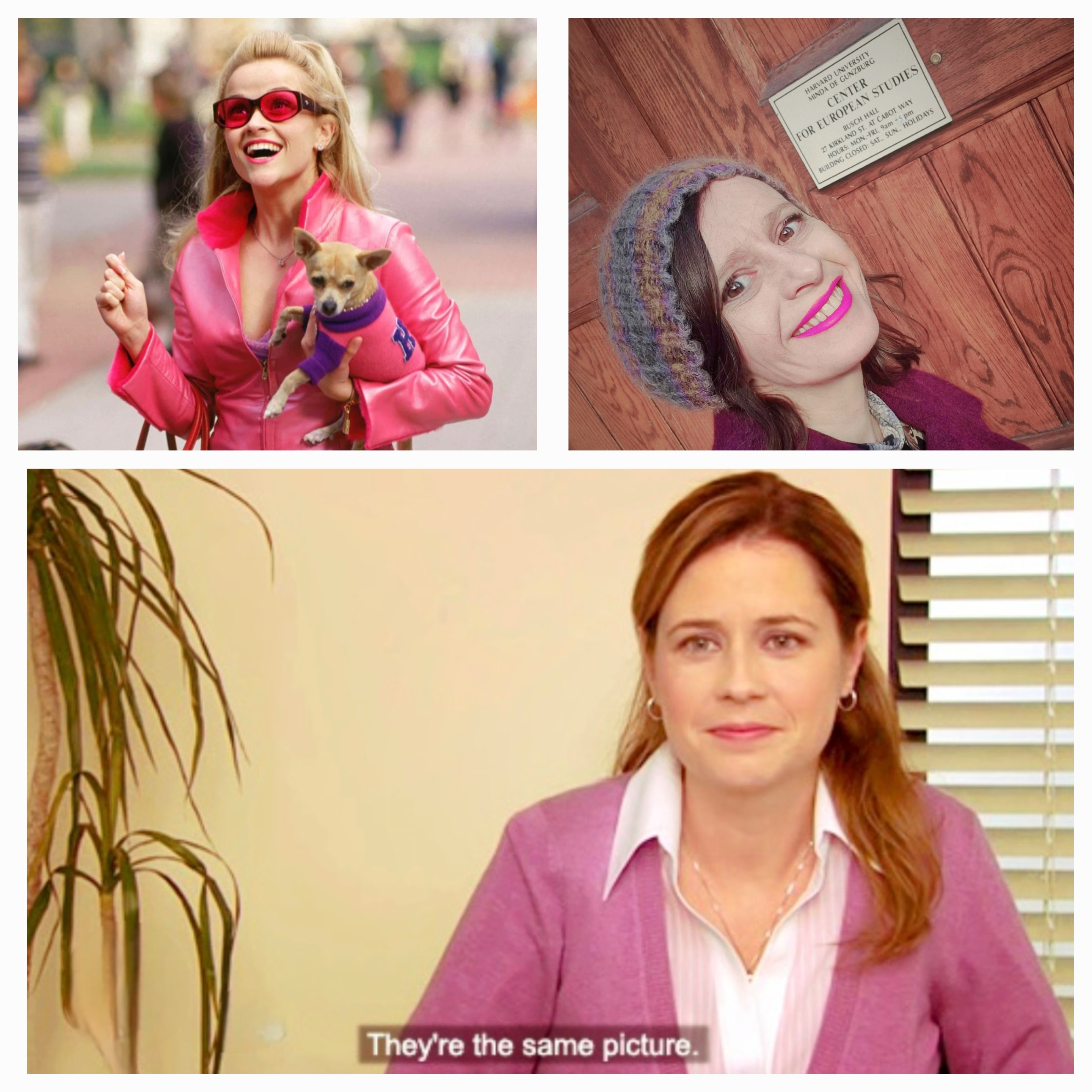
Starting yesterday, I’m officially a Visiting Scholar at the Minda de Gunzburg Center for European Studies at Harvard University, Cambridge. For the next five months, I’ll be knee-deep in finishing papers and doing my best to transform my nearly complete project on fatherhood activism in Europe into an actual book under the working title “In the name of the father, the child and gender equality: fatherhood activism in Europe.” This project, funded by the Swedish Research Council, has been my steadfast (and occasionally demanding) companion. It focuses on the complex yet fascinating world of gender (in)equality, masculinities, and fatherhood. I’m investigating European fatherhood activism from national, comparative, and transnational perspectives. Yes, it’s a niche, and yes, it’s important and yet very much underresearched.
But what fatherhood activism actually is? Well, if you are plus minus my age, or older, you may remember 2004, when the image of a man dressed as Batman waving from a balcony at Buckingham Palace made headlines across the UK and beyond. This daring stunt, known as the “Batman Action,” was organized by the British fathers’ movement as a protest against what they perceived as unfair restrictions on divorced fathers’ access to their children. Since then, the group behind the action, Fathers4Justice, has become a symbol for European fathers’ rights organizations and a broader range of social movements focused on masculinity, male identity, and men’s roles in society. Contrary to the common belief that such protests are unique to the UK, fathers’ organizations exist across almost all European countries. In Sweden, for instance, PappaBarn has been actively advocating for equal parenthood and fathers’ rights for almost two decades. Similar groups in other countries play a critical role in shaping public debates around fatherhood, masculinity, and gender equality. Many of these movements collaborate through European umbrella organizations like Colibri – European Platform for Joint Custody and the Platform for European Fathers. Despite the significance of these movements, there is surprisingly little comparative research on their European dimension. While feminist and LGBTQ movements have been extensively studied, men’s movements have not received the same attention. This project seeks to change that by conducting the first comprehensive study of European fathers’ rights organizations from national, comparative, and transnational perspectives.
Existing research (also mine) suggests that there may be several distinct types of fathers’ movements in Europe—a softer, more cooperative and more progressive line and a harder, more conservative one. Understanding these differences is essential for gaining a nuanced perspective on how these groups function and influence debates about fatherhood and gender equality. The study was conducted in multiple stages. First, a mapping of fathers’ groups and an internet-based fact-finding mission was carried out across all EU/EFTA countries. In the second stage, interviews with activists, and participant observations were conducted with representatives from Germany, Spain, and transnational organizations. This data has been analyzed using theories from gender studies, critical studies of men and masculinities, and social movement research. Beyond its academic contribution, the project holds significant societal relevance. It provides valuable insights for policymakers in Europe, support efforts to improve gender equality, and offer practical recommendations for fathers’ movements activists and other gender-based social movements. In the end, this research aims to bring much-needed attention to a little-explored but important social phenomenon, helping to shape a more inclusive and equitable discussion on gender and parenthood across Europe.
Now, none of this academic adventure would be possible without the Emma Goldman Award I was fortunate enough to receive in 2023. Thanks to Flax Foundations members (and their impeccable judgment in funding me), I get to spend these months in beautiful Cambridge. But let’s give credit where it’s really due: Reese Witherspoon, aka Elle Woods, whose iconic journey to Harvard in Legally Blonde inspired me to come here (not fully covered in pink, unfortunately, but almost). So next stop? The manicure salon.
The Guest Editors of the Special Issue of NORMA: International Journal for Masculinity Studies on “Men and Migration in Europe and beyond” warmly welcome scholarly contributions from researchers working on the issues pertaining to the international migration and mobilities, critical men and and masculinities studies. This special issue aims at collecting and broadening the scholarly knowledge on the issues concentrated on the presence of male migrants in the receiving societies.
We are very pleased to invite you to take part in the 16th Polish Sociological Congress, to be held in Gdansk, Poland 14-17 September 2016. The theme of the congress is Solidarity in the time of distrust. In addition to the congress’s theme, the programme covers other research fields and one of them will be explored in our working group dedicated to the analysis of contemporary masculinities and gender transgression. The main language of the congress is Polish and the deadline to submit an abstractfor a paper to be presented in our working group is March, 31. The general call for papers is available here and below you can find the description of our working group (in Polish).
Some days ago in Studia Humanistyczne AGH several papers on the on the variety of issues regarding men and masculinities have been published. The papers have been collected for the purpose of special issue edited by me and Urszula Kluczynska and deal with men and masculinities issues in a European, Polish, Norwegian, Swedish and Czech context, with authors residing in Poland, Czech Republic, Sweden, Spain, Germany, Austria, Norway and Slovenia. It is worth to mention that our collection is the very first special issue on critical research on men and masculinities published in Polish peer-reviewed journal and can be seen as one of the milestones in terms of establishing Polish (and Eastern European) critical studies on men and masculinities. All papers are highly interesting and definitely worth to take a look!
My latest paper (in Polish) on the role of emotions in social movements (the case of Polish fathers’ rights movement and breast cancer survivors) has been recently published in Studia Socjologiczne 4/2014 (215) and will is available here Full text The article results from research on the role of emotions in the constitution, character and dynamic of contemporary social movements. The paper is based on the cases of the fathers’ rights movement and the breast cancer survivors movement in Poland and is to a large extent the result of qualitative sociological research conducted with activists from the above mentioned movements between 2009 and 2012. Moreover, the analysis of the gathered material is preceded by an outline of the status of emotions in (Polish) sociology and the state of affairs in Polish research on the presented social movements. If You are interested in our findings and cannot read in Polish do not hesitate to contact me.
The Center of the Study of Men and Masculinities is an organiser of International Conference on Masculinities: Engaging Men and Boys for Gender Equality which will take place in New York City between 6th and 8th March 2015. The main aims of the conference are: “To infuse men’s activism in support of gender justice with the rigor and insights of the most up-to-date research; (2) to increase cooperation and ties between academic researchers who address various gender issues, and feminist activists, practitioners, and advocates.” The deadline for submitting proposals is October, 31st. Proposals should be submitted online and any questions about the proposal process should be directed to csmmsb2015@gmail.com. More information about the conference can be found under following link: Info
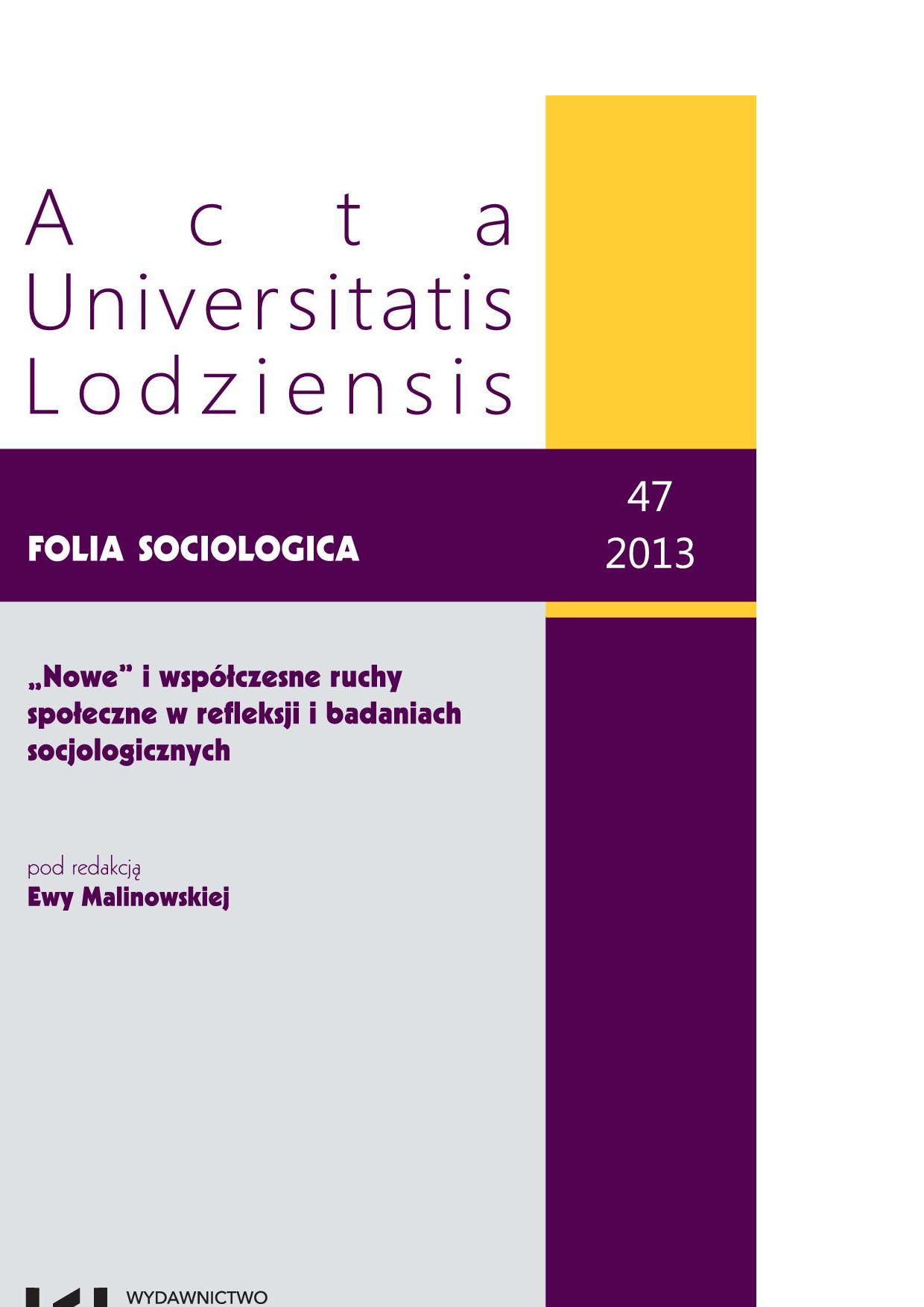
My latest paper on men’s social movements in Poland has been recently published in Folia Sociologica (47/2013) and is available (in Polish) here Full text

 The Guest Editors of the Special Issue of
  ago in
 Dr. K & THE men