Emma Goldman, Elle Woods, and I

Starting yesterday, I’m officially a Visiting Scholar at the Minda de Gunzburg Center for European Studies at Harvard University, Cambridge. For the next five months, I’ll be knee-deep in finishing papers and doing my best to transform my nearly complete project on fatherhood activism in Europe into an actual book under the working title “In the name of the father, the child and gender equality: fatherhood activism in Europe.” This project, funded by the Swedish Research Council, has been my steadfast (and occasionally demanding) companion. It focuses on the complex yet fascinating world of gender (in)equality, masculinities, and fatherhood. I’m investigating European fatherhood activism from national, comparative, and transnational perspectives. Yes, it’s a niche, and yes, it’s important and yet very much underresearched. 

But what fatherhood activism actually is? Well, if you are plus minus my age, or older, you may remember 2004, when the image of a man dressed as Batman waving from a balcony at Buckingham Palace made headlines across the UK and beyond. This daring stunt, known as the “Batman Action,” was organized by the British fathers’ movement as a protest against what they perceived as unfair restrictions on divorced fathers’ access to their children. Since then, the group behind the action, Fathers4Justice, has become a symbol for European fathers’ rights organizations and a broader range of social movements focused on masculinity, male identity, and men’s roles in society. Contrary to the common belief that such protests are unique to the UK, fathers’ organizations exist across almost all European countries. In Sweden, for instance, PappaBarn has been actively advocating for equal parenthood and fathers’ rights for almost two decades. Similar groups in other countries play a critical role in shaping public debates around fatherhood, masculinity, and gender equality. Many of these movements collaborate through European umbrella organizations like Colibri – European Platform for Joint Custody and the Platform for European Fathers. Despite the significance of these movements, there is surprisingly little comparative research on their European dimension. While feminist and LGBTQ movements have been extensively studied, men’s movements have not received the same attention. This project seeks to change that by conducting the first comprehensive study of European fathers’ rights organizations from national, comparative, and transnational perspectives.

Existing research (also mine) suggests that there may be several distinct types of fathers’ movements in Europe—a softer, more cooperative and more progressive line and a harder, more conservative one. Understanding these differences is essential for gaining a nuanced perspective on how these groups function and influence debates about fatherhood and gender equality. The study was conducted in multiple stages. First, a mapping of fathers’ groups and an internet-based fact-finding mission was carried out across all EU/EFTA countries. In the second stage, interviews with activists, and participant observations were conducted with representatives from Germany, Spain, and transnational organizations. This data has been analyzed using theories from gender studies, critical studies of men and masculinities, and social movement research.  Beyond its academic contribution, the project holds significant societal relevance. It provides valuable insights for policymakers in Europe, support efforts to improve gender equality, and offer practical recommendations for fathers’ movements activists and other gender-based social movements. In the end, this research aims to bring much-needed attention to a little-explored but important social phenomenon, helping to shape a more inclusive and equitable discussion on gender and parenthood across Europe.

Now, none of this academic adventure would be possible without the Emma Goldman Award I was fortunate enough to receive in 2023. Thanks to Flax Foundations members (and their impeccable judgment in funding me), I get to spend these months in beautiful  Cambridge. But let’s give credit where it’s really due: Reese Witherspoon, aka Elle Woods, whose iconic journey to Harvard in Legally Blonde inspired me to come here (not fully covered in pink, unfortunately, but almost). So next stop? The manicure salon.

Dancing on his own: intimate lives of single migrant men in Europe

When we think about migration and migrants’ experiences, a lot of us imagine the economic struggles, the cultural shock, and the difficulty of fitting into a new society. But rarely do we pause to consider the emotional and romantic lives of migrants, including single men. Are they on a wild ride of dating adventures in a new land? Or are they, in fact, facing a lonelier road than we might expect? In our latest article “He leads a lonely life: single men’s narratives of dating and relationships in the context of transnational migration” published in the Journal of Ethnic and Migration Studies we try to give you a look into this under-explored aspect of migrant lives. Spoiler alert: It’s not all roses and romance.

Let’s start by busting a myth that’s as stubborn as it is harmful—the idea that single migrant men are prowling through their new homelands like sexual predators, hunting for conquests. This stereotype paints them as aggressive, hypersexual beings who are only interested in one thing, labeling them as carriers of dangerous, foreign masculinity, which has been skillfully described by Paul Scheibelhofer years ago (2017). However, the reality is much more complex and, dare I say, relatable. The men interviewed in our study (we spoke to 51 single migrants from Bangladesh, Poland, Romania, and Syria, who live either in Sweden or Italy) are only rarely chasing after endless sexual encounters. Instead, they are usually searching for something far more meaningful—love, partnership, and a genuine connection. Unfortunately, this quest is often met with obstacles that leave them feeling frustrated and, ultimately, lonely. It turns out that being a single migrant man isn’t the playboy fantasy some might imagine; it’s more like a rom-com where the lead never quite gets the girl.

So, what’s dating like for these guys? Picture this: you’ve moved to a new country, you’re trying to navigate a different language, culture, and social norms, and on top of that, you’re trying to date. It’s not easy, and the men in the study describe their experiences as challenging, to say the least. They often find themselves on the receiving end of stereotypes and prejudice, with potential partners making assumptions based on their background. Some face outright rejection, while others are reduced to nothing more than their ethnicity or nationality. Some of them give up after a while, but others try again. They continue to search for meaningful relationships, even when the dating game feels like an uphill battle. The study highlights how their pursuit of love is often accompanied by a deep sense of frustration and loneliness. For many, the journey to finding a partner in a foreign land is fraught with misunderstandings, cultural barriers, and a lack of social networks. It’s not that they don’t want to connect; it’s that the odds are stacked against them.

One of the most striking findings from this research is just how lonely the experience of dating can be for these men. Migration often means leaving behind family, friends, and the familiar comfort of home. For single men, this can lead to a profound sense of isolation. They’re trying to build a new life in a place where they may not know anyone and where making new connections—romantic or otherwise—can be incredibly difficult. The men in the study talk about how this loneliness affects them deeply. They’re not just looking for a partner; they’re looking for a sense of belonging. And when that’s hard to find, it can be crushing. This isn’t just a matter of being unlucky in love; it’s about the broader challenges of integration and the emotional toll that migration can take.

Now, let’s get a bit nerdy for a moment because this research isn’t just about telling a story; it’s also about advancing theory in some pretty cool ways. In our analyses, we utilize the concept of sexual capital (Kaplan and Illouz 2021) in the context of migration—a move that’s as innovative as it is insightful.  Sexual capital is all about the social value a person has in the dating market. Think of it as the romantic equivalent of a credit score—it affects your desirability and the kind of relationships you can attract. The study argues that migration creates a unique sexual field where the rules are different and where migrants often find themselves with a lower “sexual credit score” than they might have had back home. In our view, this is a fresh way of looking at migration, love, and dating, and it opens up new avenues for understanding how these men navigate their romantic lives. But we don’t stop there. We also continue developing the concept of the sexual field (Green 2013) within the context of migration. A sexual field is essentially the social environment in which dating and relationships happen, influenced by factors like culture, social norms, and power dynamics. We argue that migration itself is a specific sexual field with its own unique challenges and dynamics. IOHO, this is rather a unique way of analyzing migration and integration.  By framing migration in this way, our research provides a new lens through which to understand the struggles and strategies of single migrant men in their search for love.

What makes this study so unique is its focus on a group that’s often overlooked or misunderstood in both academic research and popular media. Single migrant men are typically either ignored or demonized, but this research humanizes them, showing that their romantic lives are filled with the same hopes, dreams, and disappointments that anyone else might experience. By focusing on their narratives, we give a voice to men who are often silenced or marginalized. It challenges the stereotypes that paint them as predators and instead presents them as individuals navigating a complex and often unforgiving dating landscape.

If there’s one thing to take away from this research, it’s that single migrant men are not sexual predators or heartless Casanovas, as some might assume. They’re people—people who are often lonely, frustrated, and just trying to find love in a new and challenging environment. Their stories remind us that migration isn’t just an economic or political issue; it’s a deeply personal one, affecting every aspect of a person’s life, including their ability to form meaningful relationships. This study also reminds us of the importance of empathy and understanding. It challenges us to look beyond stereotypes and see the real, complex human beings behind them. And for those interested in the academic side of things, it pushes the boundaries of how we think about migration, dating, and the social dynamics that shape them. So, next time you hear someone making sweeping generalizations about single migrant men, remember our findings. They’re not out to conquer; they’re just trying to connect—just like the rest of us. And in that, there’s something truly relatable, human, and worthy of our attention and understanding.

CFP: Research Stream “Sociology of Masculinities: Theoretical and Methodological Implications” at the 17th Polish Sociological Congress “Me, Us, Them?Subjectivity, Identity, Belonging”, September 2019, Wroclaw, Poland

Dear all!Together with my other dear colleague, Julia Kubisa, we would like to invite you to join us in September in Wroclaw (Poland) at the 17th Polish Sociological Congress. We would mainly discuss (in English ;)) the theoretical and methodological contributions as well as challenges within the most fascinating subdiscipline ever, namely, the sociology of masculinities.

Continue reading

CFP: Research Stream “Men and Masculinities in a Changing Europe” at the 14th ESA Conference 2019, Manchester, UK

Together with my dear colleague, Katarzyna Suwada, I would like to invite you, dear sociologists, critical men and masculinities’ scholars as well as everyone else interested in sociology of masculinities, to join us in August in Manchester at the 14th European Sociological Associaton conference, where we would like to discuss the situation of men and condition of masculinities in a changing Europe.

In recent years two major trends linked to the transformation of masculinities can be observed in European societies. On the one hand, researchers recognise significant changes in both models of masculinities and male gender roles. These changes have been followed by a switch in public discourses and politics focused on men and boys (Scambor at al. 2014). Moreover, one can identify a flourishing number of grass-roots initiatives oriented on men and gender equality (Wojnicka 2016). Yet, on the other hand, Europe is also facing a crisis of liberal democracy, which affects the value of gender equality, and in some regions a re-traditionalisation of gender roles becomes excessively visible. Far-right groups, dominated by men, are gaining greater popularity by attacking (male) immigrants and refugees coming from other parts of the world. Such trends are connected to the resurrection of hegemonic and toxic forms of masculinities. They also create new forms of marginalised masculinities. Continue reading

Reservoir postdocs. On academia unemployment, hunt for grants and precarious living among (young) scholars

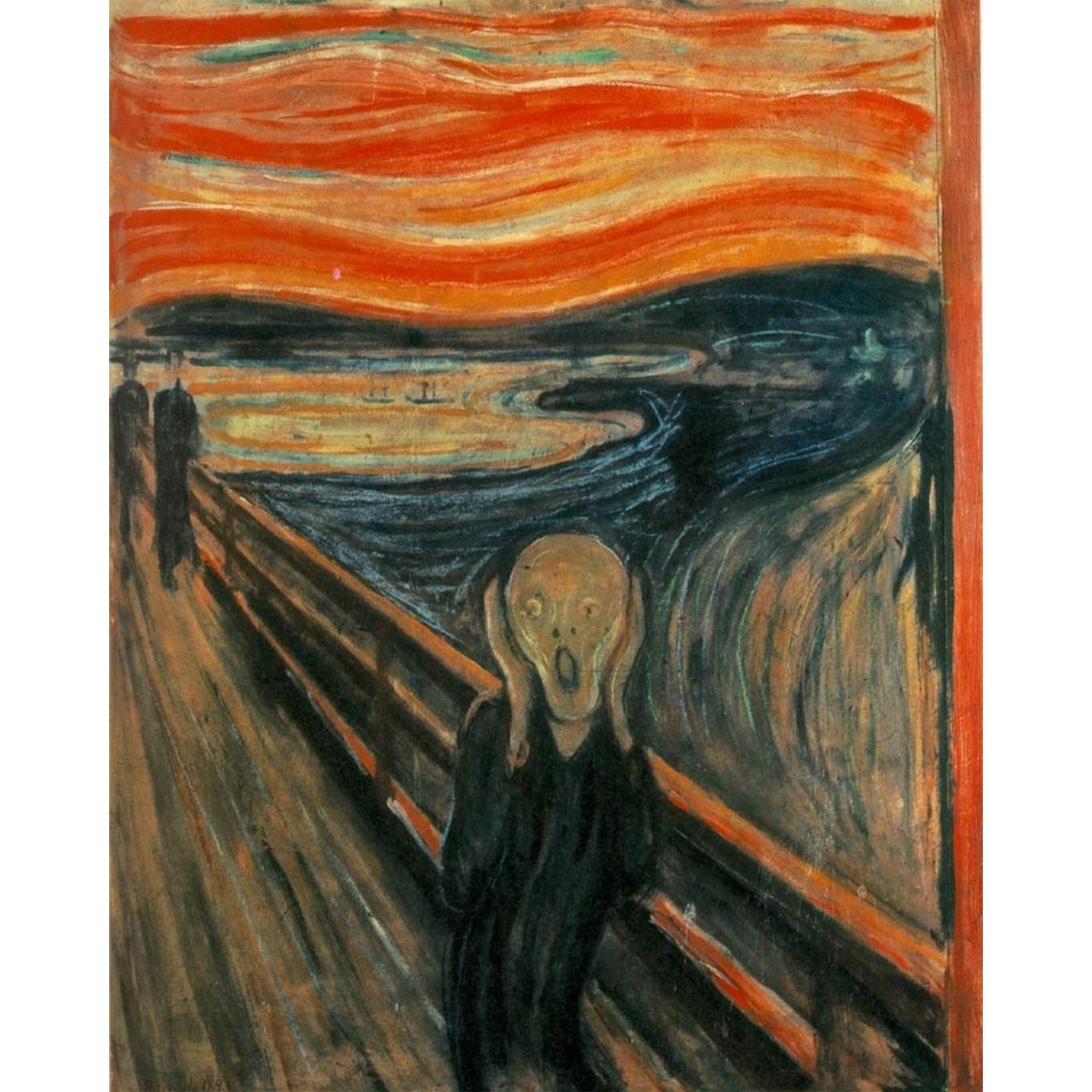
munch-the-scream-1440x1440A few months ago I read a Guardian article about a scholar who had decided to honour his friend by telling his traumatic story. The friend had killed himself due to his lack of success (widely defined) in academia. The men met during a fellowship a few years back and had remained friends despite one of them (the author) eventually attaining a position outside academia while his friend struggled with short-term postdoc positions until his tragic end. “Over the course of five years, Dolan held positions in Cambridge, Dublin, Southampton, Amsterdam and Crete, most of which meant living away from his partner.” When I read this piece, my six months of unemployment had just started and I couldn’t sleep for a couple of nights wondering: when will I reach the point where suicide becomes an option actually worth considering?

Continue reading