 Several weeks ago I had the pleasure of taking part in a student workshop on “Gender Equality in Eastern Europe (and beyond) – laws and practices” organised by Justyna Stypinska and her students at the Department of Sociology of the Institute for East European Studies, Free University of Berlin. Together with Irina Catrinel Craciun, Majda Hrzenjak, Marc Gärtner and Alexander Kondakov, I participated in expert panels, but the real heroines and heroes of the day were the students who presented the results of their work during a course on gender equality and law conducted by Justyna. During the workshop, one of my tasks was to give a feedback on the student papers gathered in Panel I, Gender equality and policymaking. As I usually like to comment on other people’s work (sometimes more than do my own), I was glad to accept the offer and, to my delight, I was rewarded with really good presentations.
XVI Polish Sociological Congress: working group “Gender trouble”: from masculinities’ (re)production to gender transgression
We are very pleased to invite you to take part in the 16th Polish Sociological Congress, to be held in Gdansk, Poland 14-17 September 2016. The theme of the congress is Solidarity in the time of distrust. In addition to the congress’s theme, the programme covers other research fields and one of them will be explored in our working group dedicated to the analysis of contemporary masculinities and gender transgression. The main language of the congress is Polish and the deadline to submit an abstract for a paper to be presented in our working group is March, 31. The general call for papers is available here and below you can find the description of our working group (in Polish).
Play it again, Sam or let’s talk about masculinities
 In the last several weeks Göteborgs – Posten, one of the most popular daily newspapers in my city, has become a platform where the issue of the increasing number of male refugees coming to/staying in Sweden has been raised. As a feminist scholar researching men and masculinity issues for almost a decade, I couldn’t be happier to observe this type of gender-sensitive discussion being conducted in one of the leading Gothenburg newspapers. However, as the problem analysed is extremely complex, and the intersections between masculinities, migration processes and violence play a crucial role in it, further discussion should be elaborated and it cannot be limited to the presentation of contradictory statements from social researchers, which is happening at the moment. Continue reading
The (Hateful) 8 Men
 Despite the fact that 39th Göteborgs Film Festival is being held at the moment in my city, the first movie I saw in the cinema in 2016 was Tarantino’s Hateful Eight. I was quite excited and decided to watch it ASAP despite rather restrained reviews I’d heard and read here and there. No matter what people had said I was mostly tempted by the fact that the movie is a story of men and relations between different masculinities’ representations. Additionally, after superb Django Unchained and not less brilliant The Homesman, I really looked forward to seeing another awesome western. Imagine my first, but not last disappointment, when I realized that I was watching Agatha Christie-like crime story instead…
War’s manly face: comments on the Cologne attacks
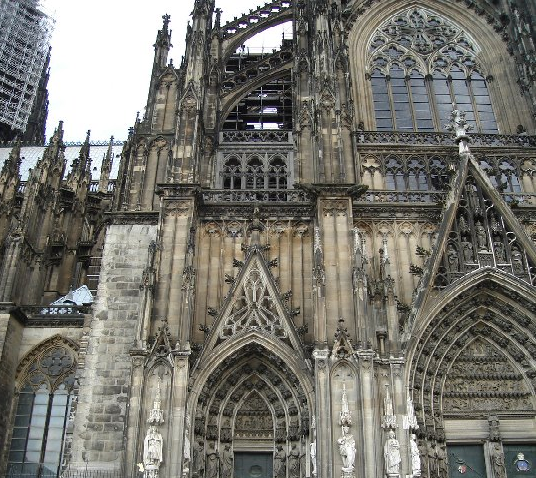 In the 1950s an anonymous author published her book A Woman in Berlin, in which the history of mass rapes perpetrated at the end of the Second World War by Red Army soldiers (white men) against German (white) women is described. Grbavica, directed by Jasmila Žbanić, tells the story of rapes perpetrated by Serbian men (white Christians) against Bosnian women (white Muslims) during the war in the former Yugoslavia. Stories of women from Vietnam, Bangladesh, Uganda, Rwanda, Sierra Leone, Peru, the Democratic Republic of Congo, Darfur and most recently Libya, Iraq and Syria (Henry 2016), victims of mass rapes perpetrated by men (white, black, Asian, catholic, orthodox, Muslim, atheist, old, young, unemployed, educated etc.) during armed conflicts, still wait to be told. Continue reading
2 CERGU’s PhD positions
At the Cent re for European Research at the University of Gothenburg two fully funded positions for PhD students are available. If you are interested in European studies and would like to write PhD thesis in Gothenburg apply before February, 7 2016. More details on the job assignments and application procedure can be found here: Job Opportunities
International Gender Studies Congress “Gender Studies in Debate: Pathways, challenges and interdisciplinary perspectives”
 Gender and women studies and feminisms have produced important transformations in our daily life and in our understanding of reality. While the topic of equality of rights is increasingly on the public agenda, there have been advances and retreats and persisting gender inequalities continue to challenge us to look for more solid analyses. The Interdisciplinary Centre on Gender Studies (CIEG) wishes to contribute to the analytical deepening of these issues and invites you to participate in the International Congress of Gender Studies, on 25, 26 and 27th may 2016 under the following theme “Gender Studies in Debate: Pathways, challenges and interdisciplinary perspectives” Continue reading
Special issue on men and masculinities in the European dimension
Some days ago in Studia Humanistyczne AGH several papers on the on the variety of issues regarding men and masculinities have been published. The papers have been collected for the purpose of special issue edited by me and Urszula Kluczynska and deal with men and masculinities issues in a European, Polish, Norwegian, Swedish and Czech context, with authors residing in Poland, Czech Republic, Sweden, Spain, Germany, Austria, Norway and Slovenia. It is worth to mention that our collection is the very first special issue on critical research on men and masculinities published in Polish peer-reviewed journal and can be seen as one of the milestones in terms of establishing Polish (and Eastern European) critical studies on men and masculinities. All papers are highly interesting and definitely worth to take a look!
The paper on work with perpetrators in the Eastern European and Baltic countries
 Few weeks ago my paper entitled Work with Perpetrators of Domestic Violence in Eastern European and Baltic countries was published in the special issue of Czech peer-reviewed journal Gender, Equal Opportunities, Research (Gender, rovné příležitosti, výzkum) dedicated to men and masculinities issues. The paper is a consequence of my scientific interests which include, among others, men and violence perpetration. My analysis is based on the findings from the Daphne III project Evaluation of European Perpetrators Programmes (2012-2013) as well as on the knowledge I gained during my work as a Research and Communication Officer in Work with Perpetrators – European Network.
My first publication in “Men and Masculinities” (JMM)
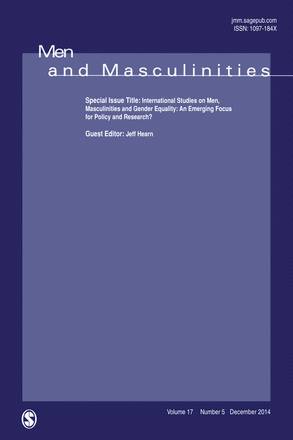 Few days ago I finally joined the authors publishing in “Men and Masculinities” (JMM), the number one scientific journal from the critical studies on men and masculinities area. The mentioned article is a result of the PROGRESS project “Role of men in gender equality” and is a presentation of the main project results. “This project was the first systematic research study of all European Union member states and associated European Free Trade Association states regarding men and gender equality in the fields of education and paid labor, the involvement of men in care and domestic work responsibilities, men’s health, gender-based violence, and men’s participation in gender equality policy. The main objective of the study was to gain better knowledge on the role and positioning of men concerning gender equality. A number of themes were emphasized.
 Dr. K & THE men